In the fast-moving world of fashion, choosing the right equipment is more important than ever. A lot of industry folks really stress how crucial it is to invest in a good Digital Garment Printer. John Smith from PrintTech Solutions even says, "A top-notch Digital Printer can totally change the way you make things." Of course, when you're picking out a printer, there are a bunch of things to think about.
Things like print quality, how fast it works, and whether it’s cost-effective are all super important. Every business has its own needs, so what works for one might not be ideal for another. Designers, in particular, love how Digital Printing gives them more flexibility — but it’s not perfect. Some models can have issues, and that might cause headaches by messing with your workflow or even your reputation if results aren’t consistent.
Plus, tech moves so quickly these days. The printers that are hot today might be outdated tomorrow. Staying on top of the latest trends is a smart move. If you invest in a highly-rated "Digital Garment Printer," you could gain a real competitive edge. Just, make sure to read reviews, industry feedback, and testimonials before making a call — that way, you avoid costly mistakes. In the end, doing your homework and consulting experts is totally worth it for making a smart, informed decision.
Choosing the right digital garment printer is crucial for your business. Factors such as print quality, speed, and versatility should guide your decision. A Digital Direct To Garment Printer offers unique benefits, but it’s not without potential drawbacks. Ensure you assess your specific printing needs before making a choice.
Print quality should be a top priority. Look for printers that can achieve high resolution and vibrant colors. Testing different samples can help you gauge a printer’s capabilities. Speed is also essential. A printer that runs slowly can cause delays in fulfilling orders. Evaluate the production volume that you expect to handle.
Tips: Make sure to consider maintenance costs. Some printers require frequent servicing, which can impact your budget. Also, think about the scalability of the machine. As your business grows, your needs might change. A printer that adapts easily to new requirements can save you time and money in the long run. Always keep compatibility with inks in mind. Using generic supplies can result in quality issues.
Remember, investing in a Digital Direct To Garment Printer is a long-term commitment. Weigh your options carefully to avoid costly mistakes.
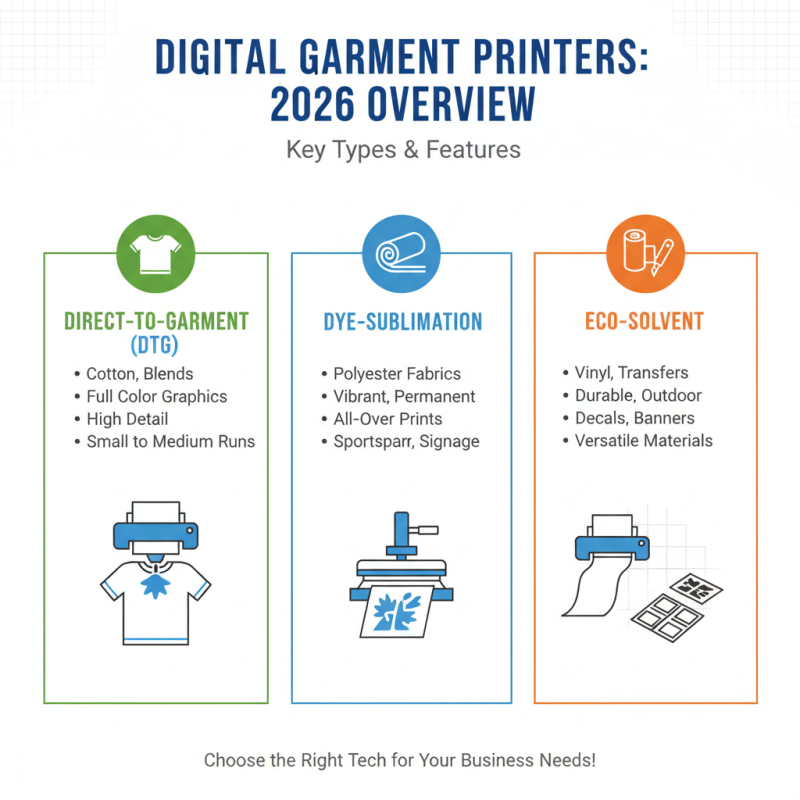
In 2026, the landscape of Digital Garment Printing shows diverse options catering to various business needs. Businesses can choose from several types of printers, each with its unique advantages and limitations. The major categories include direct-to-garment (DTG), dye-sublimation, and eco-solvent printers. Each type offers unique characteristics that can impact your production efficiency and product quality.
Direct-to-garment printing allows for high-detail designs directly on fabric. According to a recent report from Smithers Pira, the DTG market is expected to reach $6.5 billion by 2026. However, it's essential to consider the upfront costs and ongoing maintenance of these machines. Dye-sublimation, on the other hand, is best suited for polyester fabrics and is known for vibrant color reproduction. Its operating costs tend to be lower than DTG, but it requires a specific fabric type, limiting its versatility.
Eco-solvent printers provide a balance between quality and cost-effectiveness. They are ideal for outdoor products and banners. However, their adherence and durability can sometimes fall short compared to DTG prints. As you explore digital garment printing options, weigh these factors carefully. Understanding the strengths and weaknesses of each printer type is crucial for making an informed decision that aligns with your business needs.
When exploring the best digital garment printers for your business needs, it’s essential to consider key brands that excel in technology and innovation. The market for Garment Digital Printing is rapidly growing, with a forecasted CAGR of 12% over the next five years. This growth highlights the increasing demand for high-quality printing solutions.
Leading brands in the digital garment printing sector have invested heavily in research. They focus on print quality, speed, and sustainability. According to a recent report, 70% of businesses cite print quality as a top priority when selecting a printer. Many brands now offer eco-friendly inks and materials, catering to the rising consumer demand for sustainable practices. However, the high initial cost of these machines can be a barrier for small businesses.
It's also important to navigate your options carefully. Different brands present unique features that may suit specific needs. Some brands focus on user-friendly interfaces, while others emphasize advanced technology capable of handling complex designs. Potential buyers should weigh these factors against their business goals. Investing in a quality garment digital printing machine is crucial but requires careful thought about how it aligns with your long-term vision.
Choosing the right digital garment printer requires careful consideration of pricing and features. Many businesses face challenges weighing their budget against desired capabilities. A high initial cost can deter some, yet investing in quality often leads to greater returns. Understanding the essence of Digital Direct To Garment printing is essential for informed decisions.
Different models offer a range of functions, from print speed to image quality. While some printers excel in vibrant color reproduction, others lack consistency. Buyers must ask if they prioritize speed over detail. Additionally, features such as automatic maintenance can significantly reduce downtime. Yet, the reliability of these features can vary greatly among models.
Pricing is a pivotal factor. Entry-level printers may seem appealing, but they often come with hidden costs. The cost of inks and maintenance may affect long-term profitability. Thus, understanding total ownership costs is vital. Investing time in research can prevent costly mistakes down the road. However, don’t overlook feedback from current users; it often reveals the real performance of these machines.
When selecting a digital garment printer, maintenance and support options are crucial factors to consider. Regular maintenance helps prevent unexpected breakdowns. A comprehensive maintenance plan often includes routine checks and part replacements. It’s essential to have a schedule and stick to it. Some printers may require more frequent upkeep, especially after heavy use.
Support options can vary significantly. Look for manufacturers that provide extensive training for users. Online resources, such as tutorials and webinars, can be invaluable. Immediate access to technical support saves time during issues. Evaluate whether the support team is responsive and knowledgeable.
Some businesses overlook the importance of maintaining their equipment. Neglect might lead to higher repair costs and extended downtimes. Reflect on your operational needs. Can your staff handle basic maintenance tasks? Develop a strategy that aligns with your business goals, ensuring you choose a printer with accessible support options.
When considering the best digital garment printer for your business, examining successful case studies is invaluable. Many businesses have transformed their operations through the strategic use of these printers. For instance, a small apparel startup recently switched to digital printing. This transition allowed for quicker turnarounds and more design options. The owner noted that initial costs were higher, but the flexibility increased customer satisfaction significantly.
Another compelling example is a mid-sized company that faced shrinking profit margins. By adopting a digital garment printer, they reduced waste and improved production efficiency. They embraced unique designs that appealed to niche markets. However, they also encountered challenges related to equipment maintenance and training staff. Despite these hurdles, their sales increased by 40% in just one year.
These examples illustrate the importance of aligning technology with business goals. Digital garment printers offer incredible opportunities, but businesses must be prepared for the challenges they present. Reflecting on these experiences can guide others in making informed decisions for their own operations.
| Business Type | Printer Model | Production Volume (Units/Month) | Average Print Speed (Seconds/Print) | Key Features |
|---|---|---|---|---|
| Custom Apparel Shop | Model A | 1500 | 20 | High color accuracy, Eco-friendly inks |
| Sportswear Manufacturer | Model B | 2000 | 15 | Fast drying, Durable output |
| Promotional Products Company | Model C | 800 | 25 | Versatile media compatibility, Vibrant colors |
| Online T-Shirt Store | Model D | 1200 | 18 | User-friendly interface, Cost-effective |
| Fashion Boutique | Model E | 600 | 30 | Customizable designs, Easy maintenance |
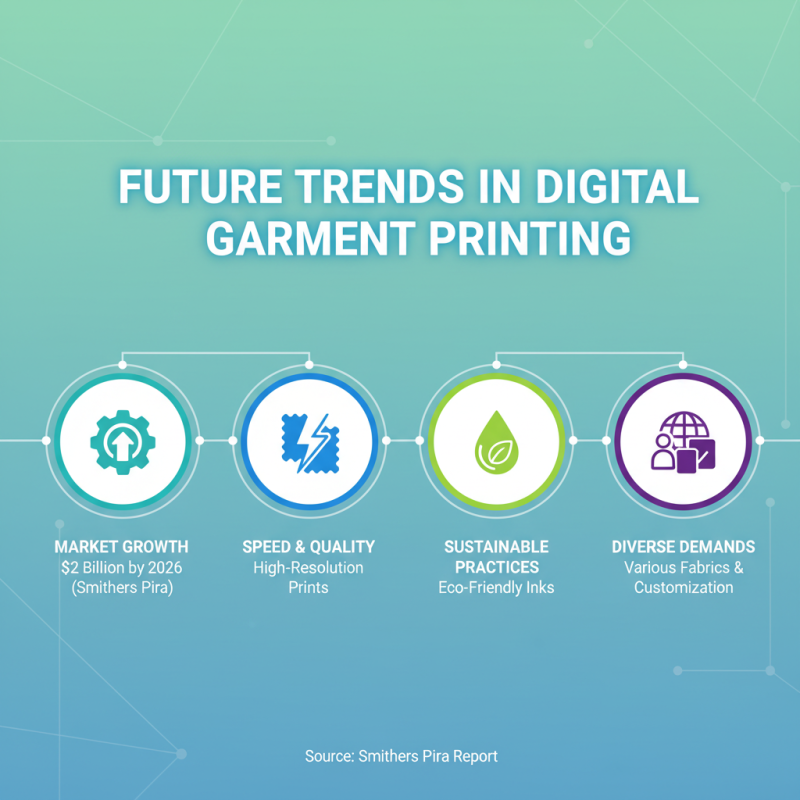
Digital garment printing is experiencing rapid evolution. According to a report by Smithers Pira, the digital textile printing market is expected to grow significantly, reaching over $2 billion by 2026. Advancements in technology are paving the way for improved speed and quality. High-resolution prints are now achievable on various fabrics, meeting diverse customer demands. The integration of eco-friendly inks is also becoming a priority, reflecting consumer preferences for sustainable practices.
With these changes, businesses must adapt to stay relevant. Staying updated on digital printing technology is essential. Investing in the latest printers can enhance productivity. It’s vital to choose equipment that offers versatility across fabric types. This allows printers to cater to customized orders and reduce waste. Consider the future of automated solutions for better efficiency in production.
Tips: Regular training for staff can maximize equipment potential. Monitor industry trends to anticipate shifts in consumer behavior. Developing a troubleshooting guide for common printing issues can save time and resources. Embracing innovation will ensure your business thrives in the digital garment printing landscape.
The digital belt printer YSR1816 stands out as a remarkable tool that unlocks creativity across a myriad of applications. Its versatility is showcased in its capacity to print on a wide variety of fabrics, including cotton, silk, wool, and synthetic blends. This adaptability makes it an invaluable asset for designers and manufacturers aiming to bring intricate patterns and vivid colors to life on their textile products. The advanced technology embedded in the printer, such as the industrial-grade GEN nozzle and a professional belt transmission system, ensures precise and consistent results.
With a solid and stable body structure, the YSR1816 is built to handle the demands of fast-paced production environments. It effectively addresses the challenges often faced in order fulfillment, enabling users to meet tight deadlines without compromising on quality. This printer empowers creative professionals by providing them the tools to experiment with unique designs and fresh ideas, ultimately enhancing their product offerings. Whether working with traditional fabrics or exploring innovative materials, the YSR1816 facilitates a seamless transition from concept to production, fostering an environment where creativity can flourish.
: There are several types: direct-to-garment (DTG), dye-sublimation, and eco-solvent printers.
DTG printers allow for high-detail designs directly on fabric. They are great for intricate designs.
Yes, DTG printers have high upfront costs and require ongoing maintenance.
Dye-sublimation is ideal for polyester fabrics and produces vibrant colors, but it lacks versatility.
Eco-solvent printers balance quality and cost. However, their durability may not match DTG prints.
Yes, businesses can see increased efficiency and quicker turnarounds. However, initial costs can be daunting.
Maintenance and training staff can pose significant challenges. Reflecting on these issues is important.
The startup reported quicker turnarounds and more design options, enhancing customer satisfaction.
They experienced a 40% sales increase, despite challenges with maintenance and training.
Successful implementation of digital printers can transform operations. Reflecting on experiences can guide better decisions.
When selecting a Digital Garment Printer for your business, it is crucial to consider various factors such as print quality, speed, and cost-efficiency. As of 2026, there are several types of digital garment printers available, each offering unique features suited to different production needs. Top brands in the industry provide a range of models, making it essential to compare pricing and functionalities to determine the best fit for your operations.
Maintenance and support options are equally important, ensuring that your digital garment printer remains operational and effective over time. Case studies of successful businesses highlight the transformative impact of digital printing technology on profitability and efficiency. Looking ahead, emerging trends in digital garment printing indicate advancements that will shape the future of this industry, making it an exciting time to invest in this technology.