Choosing the right printing method for your business? Yeah, it can be pretty tricky, right? There are so many options out there—like DTG and DTF printing. Honestly, understanding the ins and outs of each is super important. Jane Smith, a renowned expert in the printing world, mentions that " selecting between DTG and DTF really boils down to what your specific needs are." And I think she's onto something — making a well-informed choice really matters.
So, let’s break it down a bit. DTG, or Direct-to-Garment printing, is fantastic when you want high-quality, detailed designs — perfect for custom pieces. DTF, or Direct-to-Film printing, on the other hand, shines when you're dealing with larger orders and different fabrics. They both have their perks, but honestly, trying to pick one can feel a bit overwhelming. You’ve gotta think about stuff like how much you’re printing, what kind of fabrics you’re working with, and how complex your designs are.
At the end of the day, the choice you make could really influence how your brand performs. It’s worth taking some time to weigh the pros and cons of each method. And hey, since the industry’s always changing, keeping up with the latest trends will definitely give you an edge. Both DTG and DTF have their own unique opportunities — it’s just a matter of approaching them the right way and with a bit of thought.
Understanding DTG and DTF Printing: Key Differences
DTG and DTF printing are two popular methods for custom apparel production. Understanding their key differences can significantly impact your business decisions. Direct-to-garment (DTG) printing uses Inkjet technology, allowing for intricate designs on cotton fabrics. In contrast, direct-to-film (DTF) printing transfers designs from a film onto various materials, including polyester.
According to recent industry reports, DTG is more suited for smaller batches. It typically requires less setup time and can produce vibrant colors with detailed graphics. Statistically, over 70% of DTG users report satisfaction with print quality. However, it struggles with darker fabrics and has longer curing times. Conversely, DTF excels in versatility. A study noted that DTF can print on various substrates and suits larger orders.
It's important to consider the costs involved. DTG may have higher ink costs, averaging $1.20 per print, while DTF averages around $0.70. This difference can affect profit margins. Both methods have strengths and weaknesses. Understanding the differences between DTF and DTG is vital for making informed choices. Analyze your business needs carefully before choosing a printing method.
Comparison of DTG and DTF Printing
Market Trends: Growth of DTG and DTF Printing in 2026
The printing industry is evolving rapidly, particularly with the growth of DTG and DTF Printing. By 2026, both methods will likely dominate the market. DTG, short for Direct to Garment, excels in producing high-quality prints on fabric. It’s ideal for complex designs with many colors. Lower setup costs and quick turnaround times make DTG appealing to small businesses. However, it’s essential to consider the speed and scalability limitations.
On the other hand, DTF stands for Direct to Film. This technology offers versatility in printing on various materials. DTF printers print the design onto a special film, which is then transferred onto the fabric. This method is gaining traction because it supports vibrant colors and is more efficient for larger orders. Yet, businesses may face challenges with the transfer process, such as ensuring adhesion and durability.
As businesses evaluate their choices, understanding trends is crucial. The rise of e-commerce and demand for customized products drives both DTG and DTF printers. Companies must weigh the pros and cons of each method. Choosing between DTG and DTF printing involves assessing specific needs and market trends. While both technologies offer opportunities, careful consideration is needed to ensure the best fit for each business model.
Cost Analysis: DTG vs DTF Printing for Small Businesses
When choosing between Direct-to-Garment (DTG) and Direct-to-Film (DTF) printing, cost analysis is crucial for small businesses. Both methods have unique financial implications. DTG often requires higher initial investment in equipment and materials. This method is great for small runs, but the costs can add up quickly, especially with ink and maintenance.
On the other hand, DTF printing generally has lower upfront costs. It’s easier to scale operations as it allows for high-quality prints on various materials. However, the long-term expenses for films and transfer processes can clash with budget plans. Each business needs to consider order volume and types of garments when deciding.
Thinking about the specifics is vital. If your business relies on custom designs, DTG might suit your needs better. Yet, DTF may be more suitable if you plan to produce bulk orders. There's no one-size-fits-all solution. Continuous evaluation of costs and potential return on investment is necessary for sustainable growth.
2026 How to Choose Between DTG And DTF Printing for Your Business?
| Printing Method | Initial Investment | Cost per Print | Speed | Material Compatibility | Image Quality |
| Direct to Garment (DTG) | $10,000 - $20,000 | $3 - $5 | 20 - 40 shirts per hour | Cotton, blends | High resolution, vibrant colors |
| Direct to Film (DTF) | $8,000 - $15,000 | $1 - $3 | 30 - 50 prints per hour | Cotton, polyester, blends | Good color reproduction, slightly less vibrant than DTG |
Quality Comparison: Print Durability and Vibrancy in DTG and DTF
In the world of textile printing, both Direct-to-Garment (DTG) and Direct-to-Film (DTF) methods have their unique strengths. The choice between them often hinges on quality factors such as print durability and vibrancy. According to a recent industry report, DTG prints tend to show exceptional vibrancy on cotton fabrics. However, they may fade quicker than DTF prints, particularly after numerous washes. This durability issue can lead to unexpected costs for businesses that prioritize longevity.
DTF printing, on the other hand, applies a transfer method that adheres well to various fabric types. Research indicates that DTF prints can withstand 40% more washes before noticeable wear occurs compared to DTG prints. This resilience is especially appealing for apparel brands targeting high-use garments. The vibrancy achieved in DTF printing is also impressive, often rivaling DTG, making it a strong contender for detailed designs.
However, it’s worth noting that the initial investment for DTF equipment can be higher. Businesses may face a learning curve in managing the transfer process effectively. This inconsistency in early results might be a concern for those looking for immediate quality assurance. Evaluating these aspects is crucial in making the right choice for your printing needs.
Production Speed: Evaluating Efficiency in DTG and DTF Processes
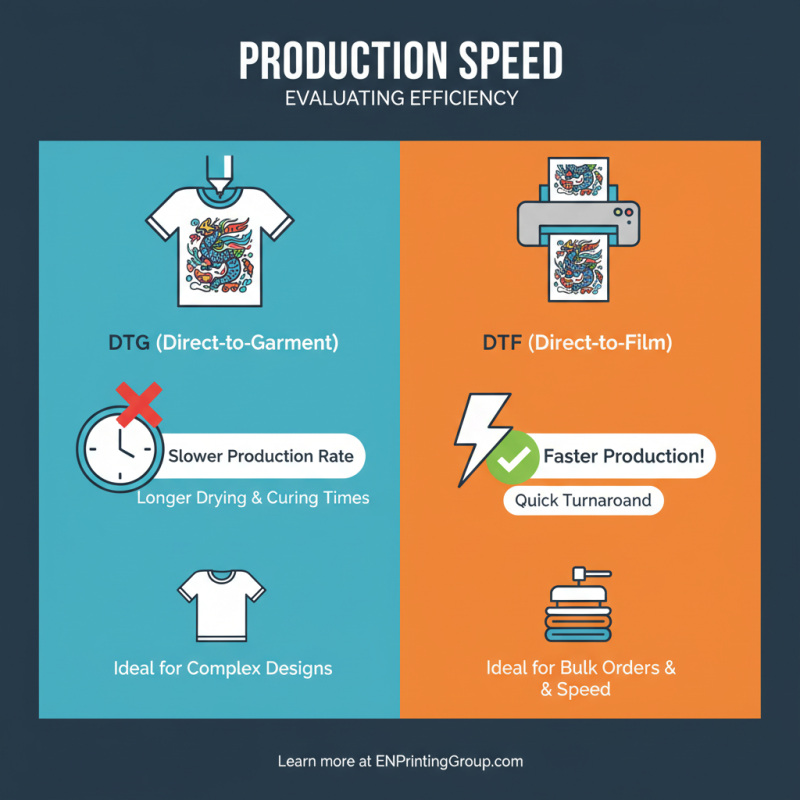
When assessing production speed, it's crucial to understand the DTF And DTG Difference. DTG printing is often praised for its simplicity and flexibility. It allows for intricate designs and vibrant color representation. However, one drawback is its slower production rate. The curing and drying times can significantly extend the time for each print job. If your business demands quick turnaround times, this could be a concern.
On the other hand, DTF printing promotes faster production speeds. The process involves printing designs on a special foil and transferring them onto fabrics. This method allows for multiple prints to be processed simultaneously, improving overall efficiency. Yet, not all aspects are perfect. DTF can create a thicker transfer layer, which may not appeal to all customers. Finding a balance between speed and quality is key for business owners.
Investing in either DTG or DTF technology requires understanding these nuances. Each method has its advantages and challenges. It's important to analyze your business needs thoroughly. A careful evaluation of production speed will guide you to the most efficient choice for your operations.
Target Audience: Choosing the Right Printing Method for Your Niche
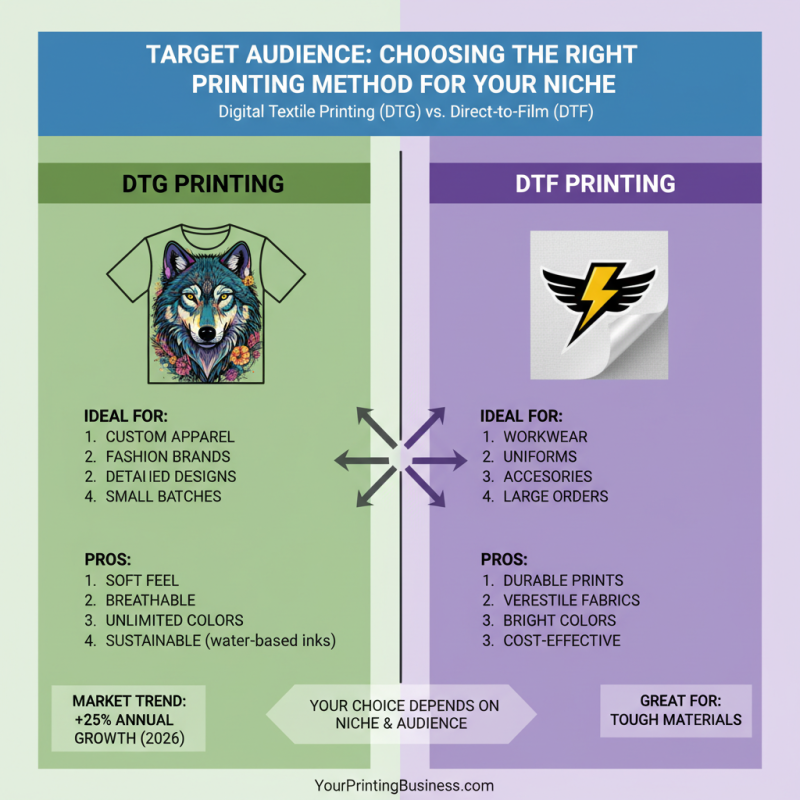
Selecting the appropriate printing method for your business can significantly affect its success. Digital textile printing (DTG) and direct-to-film (DTF) are two prominent options. Your choice largely depends on your niche and target audience. According to recent industry reports, the DTG market is expected to grow by over 25% annually until 2026. This is driven primarily by the demand for personalized items in the fashion sector.
DTF printing is gaining traction as well, particularly for its ability to print on a wider variety of materials. Businesses focusing on sportswear or outdoor gear might find DTF more suitable, as it offers excellent durability. The printed graphics withstand wash cycles better than many DTG outputs. However, one must weigh the initial setup costs against potential returns. Businesses should analyze their customer preferences closely. A lack of clear understanding can lead to misinvestment in the wrong technology.
Using data from the Textile World, it's clear that over 40% of small businesses rely on either DTG or DTF for customization. Yet, deciding on the right method is not always straightforward. Experimentation and adaptation are key. Knowing your audience helps streamline this process. Conduct surveys or collect customer feedback before finalizing your printing choice. Balancing quality, cost, and market demand is essential in this evolving landscape. Each printing method offers unique benefits, but recognizing the limits is equally important.
Technical Considerations: Equipment and Maintenance for DTG and DTF
When choosing between DTG and DTF printing, understanding the technical aspects is crucial. DTG printers require a significant upfront investment and ongoing maintenance. They need frequent cleaning and calibration. Ink clogging can happen if not used regularly. DTF, on the other hand, generally has a straightforward workflow and can be more forgiving. However, it's vital to ensure that you have the right equipment to avoid inconsistent prints.
Tips: Regularly scheduled maintenance for your Dtg And Dtf Printer is key. This will prolong the life of your equipment and improve print quality. Keeping a clean workspace can also prevent dust and debris from affecting your prints.
The choice between DTG and DTF also hinges on material compatibility. DTG works best on 100% cotton fabrics, while DTF offers versatility for various materials. This diversifies your offerings to clients. Having a clear understanding of your target market can guide your investment in either a DTG or DTF printer. Keep in mind, each method requires different inks and transfer processes, which can impact production times and costs.
Maximizing Print Quality: Analyzing the Impact of 24 Inch 4PCS I3200-A1 Printheads T604 on DTF Printing Efficiency
In the realm of Direct to Film (DTF) printing, achieving exceptional print quality while maintaining efficiency is paramount, particularly for custom clothing applications. The introduction of advanced printheads, like the 24 Inch 4PCS I3200-A1, has significantly elevated the standards of color vibrancy and image clarity. These printheads are designed to perform flawlessly across various fabric types, including cotton, polyester, and blends, making them an optimal choice for diverse printing needs in the apparel industry.
DTF printing technology stands out for its ability to produce durable prints that withstand the test of time, ensuring that vibrant colors remain intact even after multiple washes. The ease of operation and maintenance associated with modern DTF printers further enhances their appeal, allowing businesses to focus on expanding their creative capabilities rather than troubleshooting technical setbacks. As print quality and operational efficiency become increasingly critical in a competitive environment, leveraging high-performance printheads like the I3200-A1 establishes a new benchmark in the quality of return for investment in the clothing printing sector.
FAQS
: DTG typically requires a higher initial investment. DTF usually has lower upfront costs but can lead to long-term expenses.
DTG is great for small runs, although costs increase with ink and maintenance. DTF may not be ideal for small quantities.
DTG prints are vibrant on cotton but may fade faster. DTF prints last longer and are similarly vibrant on different fabrics.
Businesses should analyze their order volume and garment types. DTG suits custom designs, while DTF is better for bulk orders.
Yes, DTG requires regular maintenance to prevent issues like ink clogging. DTF is generally easier to manage but still needs attention.
Yes, DTF printing is versatile for many fabric types, which enhances product offerings. DTG works best on 100% cotton.
DTF requires the right equipment and managing the transfer process can present a learning curve for new users.
Regular maintenance and a clean workspace are essential. This helps prevent dust from affecting print quality and machine efficiency.
Yes, DTG prints may fade quicker, especially after multiple washes. This is a concern for businesses prioritizing durability.
Continuous evaluation of costs and potential return on investment is necessary. Each method has unique advantages and limitations to consider.
Conclusion
Choosing between DTG and DTF printing for your business involves understanding fundamental differences and market trends. DTG (Direct-to-Garment) printing is gaining traction due to its ability to produce vibrant prints with high detail, while DTF (Direct-to-Film) printing is noted for its durability and versatility on various fabrics. As both printing methods grow in popularity, cost analysis reveals that small businesses must consider initial investments and potential returns carefully.
Additionally, production speed is crucial; DTG typically offers slower turnaround times compared to the faster processes of DTF. Identifying the target audience is vital in making an informed decision, as certain niches may benefit more from one printing method over the other. Lastly, technical considerations regarding equipment and maintenance play a pivotal role in the long-term sustainability of either choice, highlighting the importance of thorough research in the decision-making process for DTG and DTF printing.